Study Finds Discarded Produce Parts Often Contain More Fiber Than Eaten Portions
11/02/2026 / By Coco Somers
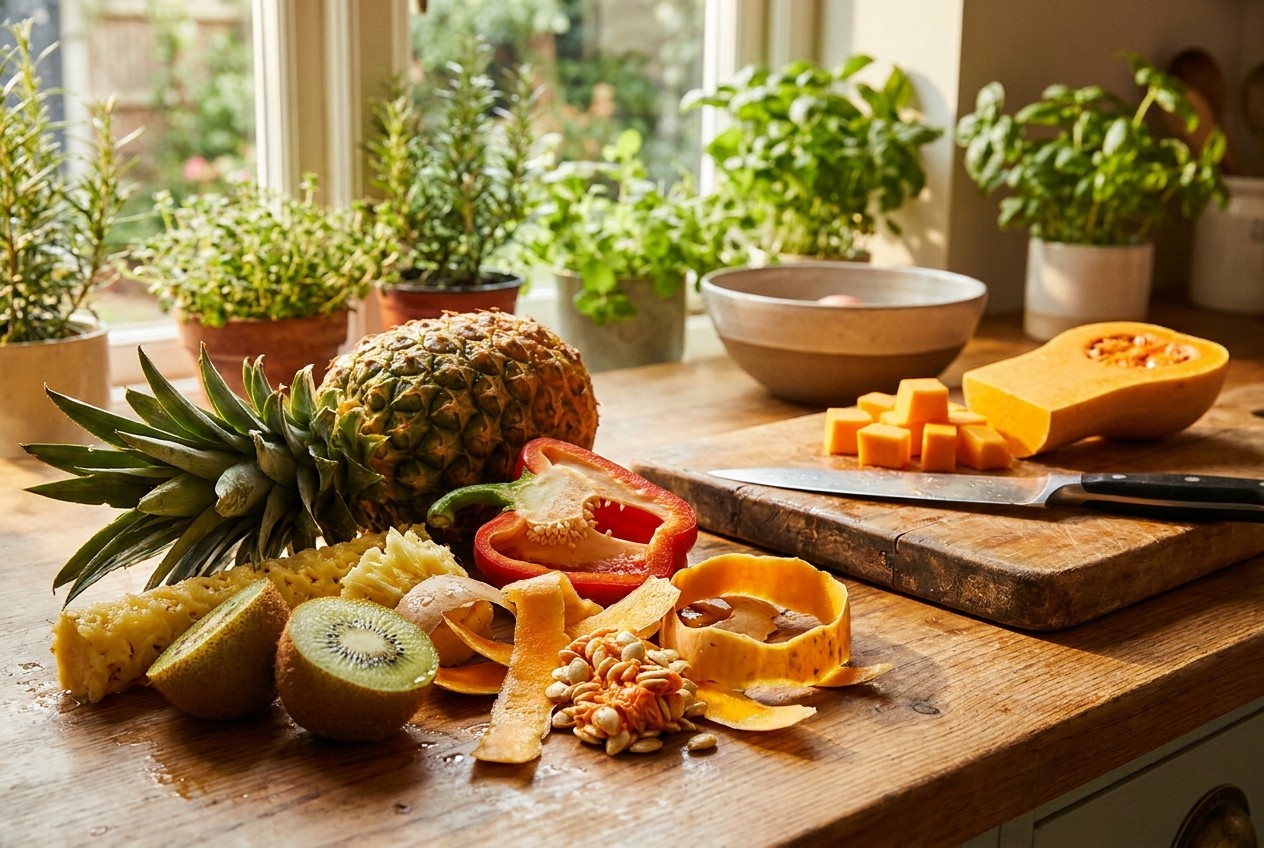
Researchers at King’s College London analyzed 12 common fruits and vegetables and found that in 10 of the 12, discarded parts such as peels, skins, stalks, and seeds contained more fiber than the parts typically eaten, according to a report published Oct. 30, 2026.
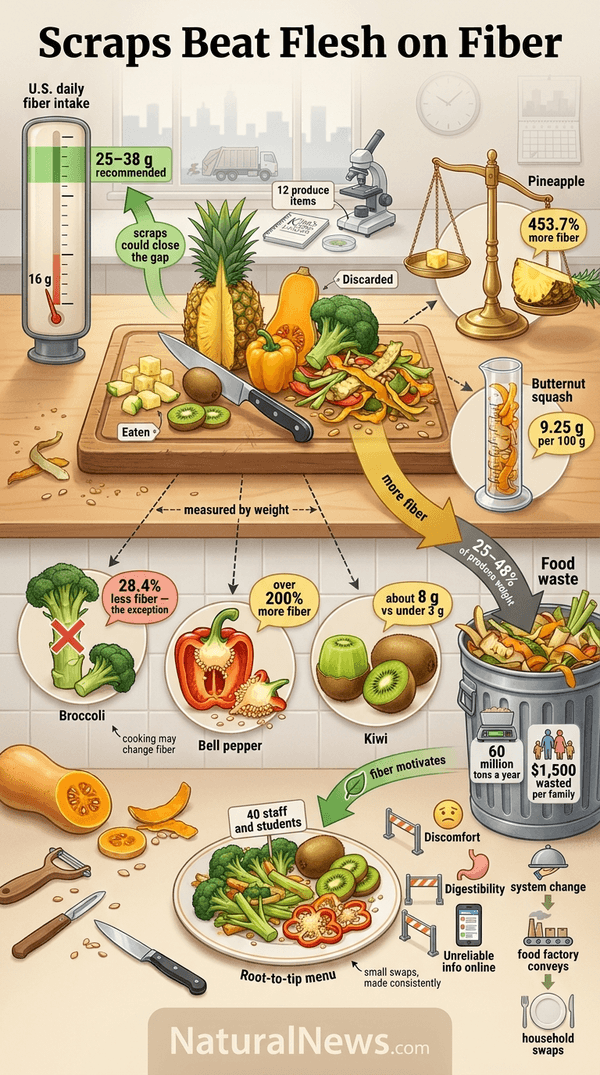
The study compared fiber content by weight. Pineapple skin and core contained 453.7 percent more fiber than the flesh. Butternut squash skin and seeds provided 9.25 grams of fiber per 100 grams. Kiwi with the skin on contained about 8 grams of fiber, compared with under 3 grams without the skin. Bell pepper seeds and membrane carried more than 200% more fiber than the walls of the pepper, according to the report.
The report stated that average fiber intake in the United States is about 16 grams per day, below the generally recommended range of 25 to 38 grams. Broccoli stalks were an exception to the study’s overall pattern, containing 28.4% less fiber than the florets, the report stated. “We’re often looking for the next superfood or supplement to improve [health],” one of the researchers said, according to the report, which suggested the answer may already be in the kitchen, “hiding in food scraps that you instinctively throw in the trash.”
Study Details and Methodology
The researchers compared the fiber content of parts typically consumed against parts usually thrown away for 12 produce items, testing them in raw form, according to the report. The study was published in the peer-reviewed International Journal of Food Sciences and Nutrition.
The discarded scraps represented between 25 and 48 percent of total produce weight in the study, the researcher noted. Items analyzed included butternut squash, bell pepper, broccoli, kiwi fruit, pineapple, and watermelon, among other common produce items.
A focus group of 40 university staff and students tested a “root-to-tip” menu at King’s College London, according to the report. Three barriers came up repeatedly: general discomfort with the idea of eating these parts, concerns about digestibility, and a lack of reliable nutrition information online, especially on social media. The focus group considered fiber content the strongest motivator for root-to-tip eating, per the report, outweighing environmental benefits. The findings align with broader nutrition research, which has established that fiber supports digestive health and is associated with reduced risk of several chronic conditions.
Food Waste and Environmental Context
Roughly 60 million tons of food are wasted annually in the United States, and 45 percent of that waste is produce, according to ReFED, a nonprofit focused on food loss and waste. Separate estimates have placed total U.S. food waste at about 40 percent annually, with the average family of four wasting more than $1,500 worth of food each year [1].
Because scraps accounted for 25 to 48 percent of produce weight in the study, a significant share of purchased fruits and vegetables is discarded rather than eaten, the report stated. Consumers who buy produce by weight are paying for parts they may never use.
The report noted that larger changes in how the food system handles produce scraps would likely require caterers and food manufacturers to rethink their use of scraps, not only individual household adjustments. Reducing food waste by just 15 percent could provide enough food to feed over 25 million Americans every year [1].
Practical Use and Limitations
The study’s authors described small swaps such as leaving skin on kiwi, adding broccoli stalks to stir-fries, or using bell pepper seeds in dishes, according to the report. The researchers also suggested cooking pineapple skin before eating it to avoid the spiky texture and potential stomach irritation.
The report stated the study measured only 12 types of produce and tested fiber content in raw form, so cooking methods could change fiber content and digestibility. The report also stated the research goal was not to prescribe a specific daily amount of fruit skin but to encourage better use of overlooked produce parts in everyday meals. The paper’s conclusions echoed established nutrition research, which has found that produce with peels or outer layers removed generally contains lower amounts of fiber than unprocessed counterparts [2].
A quote from the report: “This isn’t about forcing down unpalatable food or chasing perfection.” The authors also noted that small shifts, made consistently, can add up to meaningful changes for both fiber intake and the amount of food waste generated.
Conclusion
The report concluded that using peels, seeds, and stalks could increase fiber intake while reducing the amount of food thrown away. The study’s authors framed the findings as an opportunity rather than a mandate, emphasizing that small and sustainable adjustments matter more than strict adherence to any single dietary rule.
It stated that small, consistent shifts can add up to benefits for fiber intake and food waste, while noting that any progress to reduce food waste is good progress. According to the report, next steps for consumers include leaving peels on, saving stalks, and working seeds into meals when preparing produce.
References
- Eight Kitchen Staples That Dont Go Bad for Y – Mercola.com, January 30, 2017.
- Nutritional comparison of fresh, frozen, and canned fruits and vegetables II. Vitamin A and carotenoids, vitamin E, minerals and fiber. dvips 5.83 Copyright 1998 Radical Eye Software. Journal of the Science of Food and Agriculture J Sci Food Agric 87:1185–1196 2007
Explainer Infographic
Submit a correction >>
Tagged Under:
food is medicine, food science, food supply, food waste, Fresh, fruits, grocery, nutrients, nutrition, organics, real investigations, truth, Veggies, Whole Foods
This article may contain statements that reflect the opinion of the author
RECENT NEWS & ARTICLES